The First 5 Decisions That Shape the Entire Project

Where Project Outcomes Are Actually Determined
Measure twice, cut once.
“Measure twice, cut once” is a principle every builder understands. Once work begins, decisions become harder to reverse, more expensive to adjust, and more disruptive to the outcome.
The same holds true for projects as a whole. The most important decisions are not made during construction, they are made before a project is fully defined, when direction is still flexible and alignment is still possible.
Many projects struggle not because the team lacks talent or commitment, but because the most important decisions were never clarified early enough. By the time that becomes visible, design is underway, pricing is coming back over budget, and changing direction is both expensive and politically difficult.
The reality is straightforward:
The earliest decisions shape the entire trajectory of a project.
And often, those decisions are clarified too late.
Why Those Early Decisions Carry Disproportionate Impact
Commercial construction is inherently complex. Owners, designers, contractors, lenders, and operational leaders are all working toward the same outcome, but often along different paths, at different speeds, and with different priorities shaping their decisions. Without intention, that variability creates misalignment.

When the early foundation lacks clarity, that complexity begins to work against the project:
- design progresses beyond budget
- decisions slow under competing priorities
- schedules begin to reflect hope rather than reality
Instead of shaping the outcome, teams gradually shift into reacting to problems.
Alignment, therefore, cannot be assumed. It must be created. And creating it early requires more than conversation. It requires structure.
Given our experience and the outcomes we are committed to delivering, we lead projects through defined phases that bring teams together at the right moments. We establish alignment, validate decisions, and confirm direction before the project accelerates.
This requires structure across every engagement. Our teams lead projects with:
- Clearly defined decision gates
- Shared milestones with aligned responsibility
- Intentional points of commitment across all stakeholders
This structure is not about adding process, but it is about protecting outcomes. It ensures that critical decisions are clearly defined, aligned across the full team, and understood before momentum makes them difficult to change.
In practice, a small number of early decisions consistently determine whether a project moves forward with clarity, or become reactive.
The Five Decisions That Shape Every Project

1. Program and Scope Clarity
Too often, owners move quickly to start drawings or establish early budgets based on assumptions. Without clear leadership and alignment, those outputs begin to shape the project rather than support it.
That means clearly defining the program:
- What are the true must-haves versus the wants?
- What budget and schedule constraints must the project operate within?
- What operational needs must this building support in the future?
A useful question for leadership teams is:
If this project is wildly successful five years from now, what must be true?
That question shifts the conversation from features to outcomes, aligning design, cost, and execution around what actually matters.
Too often, organizations move directly into drawings. When that happens, the design begins to shape the project instead of the project shaping the design.
2. A Real Project Budget
Most projects do not start with a budget. They start with an idea of cost.
“We think it’s around $5 million.”
“We’d like to stay between $10 and $12 million.”
“What’s the price per square foot?”
Those are useful starting points, but not something a project should be built against.
A real project budget goes deeper than construction cost. It validates the full financial picture and ensures gaps are addressed early, avoiding what we often call “Swiss cheese” budgeting, where missing pieces only become visible once the project is already in motion.
For construction costs specifically, that level of clarity does not come from assumptions or past experience alone. It must be built through deliberate development and alignment.
As construction professionals, we do that by defining and testing:
- Scope definition — what is included, what is not, and how fully it has been developed
- System expectations — good / better / best decisions across structure, envelope, and MEP systems
- Quality level — not just workmanship, but durability, performance, and long-term performance
- Schedule and duration — realistic timelines that directly influence cost, sequencing, and procurement
- Constructability alignment — how the project will actually be built, not just how it is drawn
At Construction Simplified, this is a required early gate. We invest upfront to align cost, scope, schedule, and expectations—so decisions are made with clarity, not corrected later.
3. Decision Authority and Organizational Structure
This is often one of the least defined elements in a project.
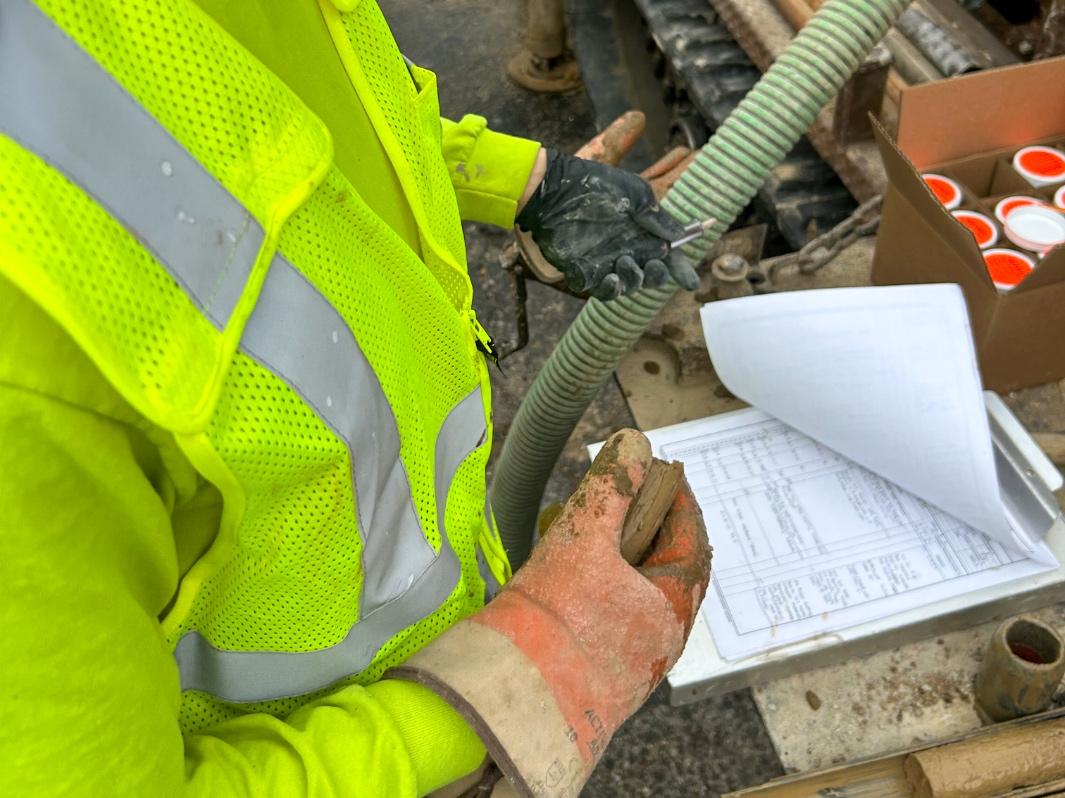
Who actually has the authority to make decisions — and how that authority is supported, has a direct impact on how the project moves.
Is it:
- The CEO?
- A facilities leader?
- A committee?
- A board?
Equally important:
How quickly can decisions be made — and are the right people consistently available to make them?
In many projects, a decision-maker is identified, but not fully empowered or supported. Team members are asked to carry responsibility without clear authority, and those with final authority are not always available to respond when needed.
When that structure is not aligned, teams hesitate. Decisions are revisited. Progress continues based on assumptions that may later change.
Successful projects establish more than a name on an org chart. They require:
- Clearly defined decision authority
- Alignment between responsibility and accountability
- Consistent availability to make timely decisions
Without that structure, even small questions can ripple into delays, rework, and loss of momentum.
4. Project Schedule and Phasing
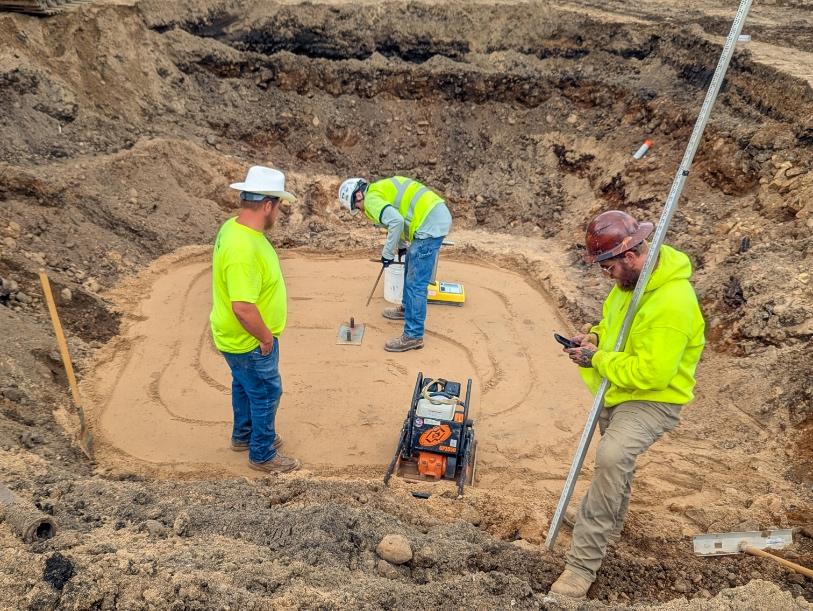
When most owners think about schedule, the question is simple:
“When will we be done?”
But a real project schedule is not a single timeline — and it is rarely linear.
A real project schedule is a structured plan for how the project will be thought through, sequenced, and executed before the pressure of construction begins.
At Construction Simplified, we lead this through defined phases and decision milestones, recognizing the “mini-milestones” that act as early tests of the team’s ability to align, respond, and drive results.
Rather than viewing the schedule as a single long timeline, this approach breaks the project into clear actions and checkpoints, ensuring the team is working toward defined outcomes at each stage, not just progressing toward a distant end date.
A realistic schedule must account for:
- Design progression and approvals
- Procurement strategy and long-lead items
- Construction sequencing and site constraints
- Operational impacts and phased occupancy
Without that level of structure, schedules tend to reflect intention rather than execution. With it, the schedule becomes a tool for alignment, preparation, and predictable performance.
5. Simplifying Success Into Three Decisions
Every project needs a shared definition of success.
Not just a finished product, but successful.
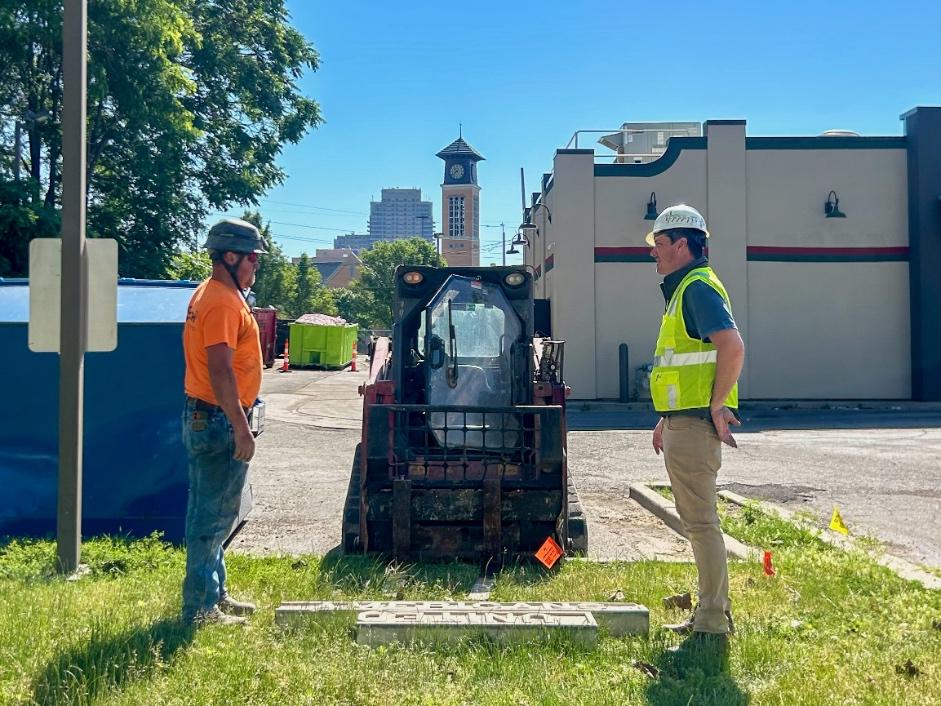
Most projects operate within three competing forces:
- Cost
- Schedule
- Quality
Think of it as a three-legged stool.
Remove one leg, and the entire system collapses.
The goal is not to maximize all three simultaneously that is rarely possible. The goal is to balance them intentionally based on what matters most to the organization.
When leadership aligns around that balance early, decision-making throughout the project becomes dramatically easier.
Every project needs a shared definition of success. Not just what will be built, but how it will perform.
We tend to categorize our projects by three primary factors:
- Cost
- Schedule
- Quality
These are directly connected. Every decision made early in a project influences how they balance against one another.
The goal is not to maximize all three, yet align on how they will be prioritized — and to understand the tradeoffs involved.
For example:
- Higher quality and more detailed design typically require more time and cost
- Accelerated schedules often increase cost and limit flexibility
- Tight budgets require clarity on where quality and scope will be adjusted
None of these paths are wrong.
But they must be intentional and aligned early, so cost, schedule, and quality are working together, not competing as the project progresses.
Case Example: Alignment Driving Performance

On a recent project in Grand Rapids, a growing co-working operator had plans to acquire a 45,000 square foot building on a highly visible urban corner with the intent to fully transform it into a dynamic, activated workspace.
The success of the project was tied to more than construction. The acquisition depended on incentive support and financing that required a clear, reliable understanding of cost, scope, and execution from the outset. That forced early alignment around what the project needed to accomplish, not just how it would look, but how it would perform across the entire building.
That clarity carried directly into the budget. Rather than relying on broad assumptions, the team established an early project budget grounded in real conditions and defined expectations.
- Initial budget (Feb 2025): $3.76M
- Final project cost (Jan 2026): $2.87M
Starting with a position rooted in reality created flexibility, allowing decisions to be made intentionally as the project evolved, rather than reacting to gaps later.
Leadership structure also played a critical role. Responsibility was clearly defined across two areas:
- real estate, financing, and structural decisions
- operational vision, layout, and user experience
While leadership was shared, authority was not ambiguous. Each area had clear ownership, allowing decisions to move efficiently without hesitation or overlap.
The schedule followed the same level of discipline. The project required a phased interior transformation aligned with operational goals, not just a single completion date.
- Initial tenant space delivered ahead of the Thanksgiving season
- Remaining areas completed prior to year-end
By structuring the work around defined milestones, the team was able to coordinate execution, maintain momentum, and deliver on critical timing expectations.
The result was a project that performed as intended. Delivered on schedule, aligned with financial expectations, and ready for immediate occupancy, the space was quickly activated and reached full utilization within months.
This outcome was not driven by any one decision. It was the result of aligning the fundamentals early—ensuring scope, budget, leadership, and schedule were working together from the start so that cost, schedule, and quality never had to compete later.
Not sure what comes next?
Connect with our team to gain clarity before making your next move.